The Essential Guide to AI Generated Video in 2025
Discover how ai generated video will transform content creation in 2025 Explore key trends workflow steps ethical insights and practical strategies for success
Oct 25, 2025
published
Imagine creating studio-quality videos in minutes without cameras, actors, or expensive sets. This is the promise of ai generated video, a technology transforming the way stories are told and brands connect with audiences. In 2025, the boundaries between creativity and technology are blurring faster than ever.
This guide offers an actionable overview for brands, content creators, and marketers ready to harness this new wave. You will discover the latest technology trends, real-world use cases, step-by-step workflows, ethical considerations, and future predictions. As adoption accelerates, now is the time to learn how ai generated video can give you a competitive edge.
The Evolution of AI-Generated Video: 2020–2025
The landscape of ai generated video has transformed dramatically over the past five years. What began as experimental technology is now reshaping how brands, creators, and marketers produce and share visual stories.
The Early Days of AI Video (2020–2022)
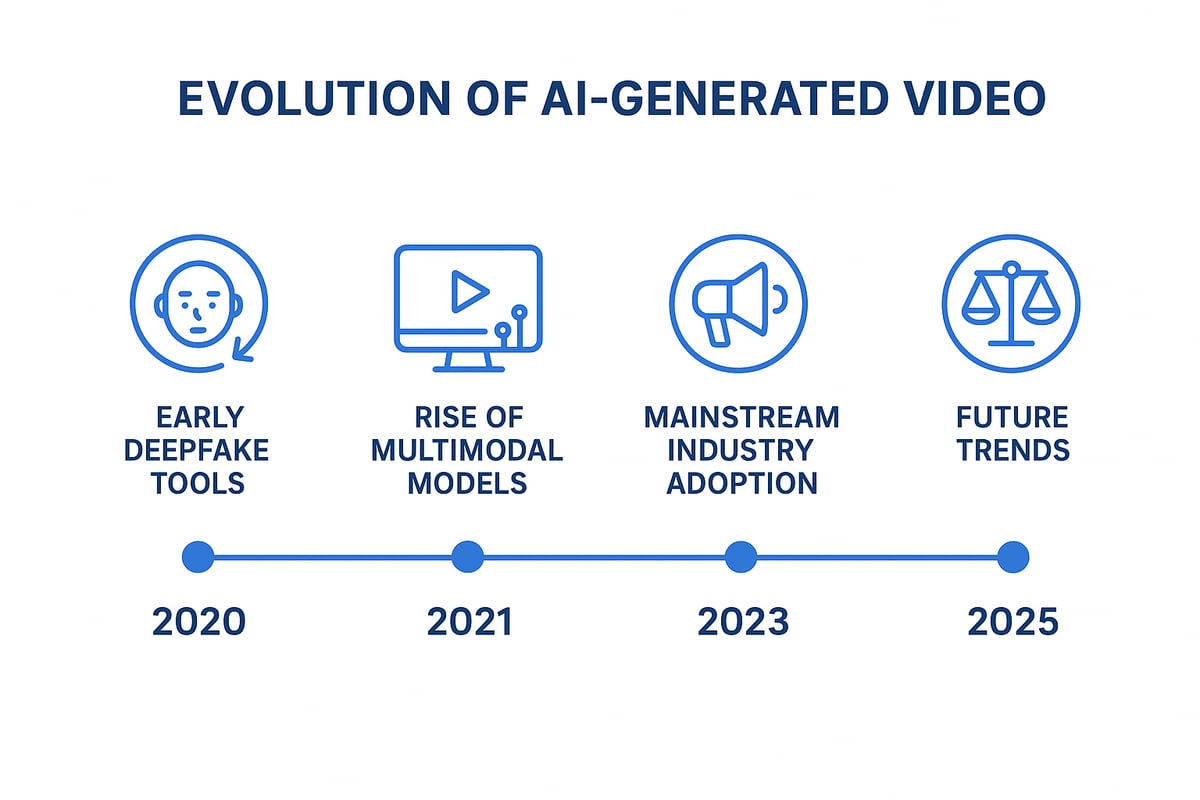
In 2020, ai generated video made its first real impact with the rise of deepfakes and synthetic media. Early tools like DeepFaceLab and Synthesia allowed creators to experiment with face swaps, voice cloning, and automated video production.
While these tools sparked excitement, they also faced major hurdles. Quality was inconsistent, and access required technical skill. Ethical concerns quickly surfaced as deepfakes went viral on social media, raising questions about authenticity and misuse.
Still, the potential was clear. The first viral ai generated video ad campaigns showed how brands could use synthetic actors and dynamic backgrounds to produce content faster and at lower costs. These years laid the foundation for the rapid evolution that would follow.
Major Technological Advancements (2023–2025)
Between 2023 and 2025, ai generated video technology leaped forward with the arrival of multimodal AI models like OpenAI Sora and Google Lumiere. These models combined text, images, and audio to create videos with stunning realism and narrative flow.
Video resolution soared to 4K and beyond, while AI voice synthesis and motion capture enabled lifelike avatars and expressive performances. By 2025, market research indicated that 35% of branded video content incorporated some form of AI generation.
This era also brought new features like style transfer and real-time editing. For an in-depth look at the latest breakthroughs and industry statistics, see the AI Video Trends Report: July 2025 Edition.
Industry Adoption and Use Cases
As ai generated video matured, adoption spread rapidly across industries. Brands, agencies, and independent creators began using AI to produce marketing videos, explainer animations, and even full-length entertainment content.
Education also benefited, with automated training modules and language learning videos reaching global audiences. Major brands launched interactive campaigns featuring AI-generated music videos, driving engagement and personalization at scale.
A standout case study saw a global brand use ai generated video to power a synchronized launch across dozens of markets, customizing content for each region while maintaining brand consistency.
Key Drivers and Barriers
The rise of ai generated video is powered by several key drivers:
Drivers | Barriers |
|---|---|
Cost reduction | Trust and authenticity |
Speed and efficiency | Deepfake misuse |
Creative freedom | Regulatory uncertainty |
Personalization | Technical limitations |
Industry leaders point to massive cost savings and creative opportunities as reasons for increased adoption. In fact, 60% of marketers plan to boost their AI video budgets in 2025.
Yet, challenges remain. Trust issues, concerns about deepfake misuse, and evolving regulations mean that brands must navigate carefully. Despite barriers, ai generated video is democratizing access to high-quality production, enabling small teams and solo creators to compete on a global stage.
How AI-Generated Video Works: Core Technologies Explained
Understanding how ai generated video is produced requires a look at the powerful technologies driving this revolution. Today’s tools blend advanced AI models, user-friendly workflows, and impressive capabilities, all while facing unique challenges.
AI Models and Algorithms Behind Video Generation
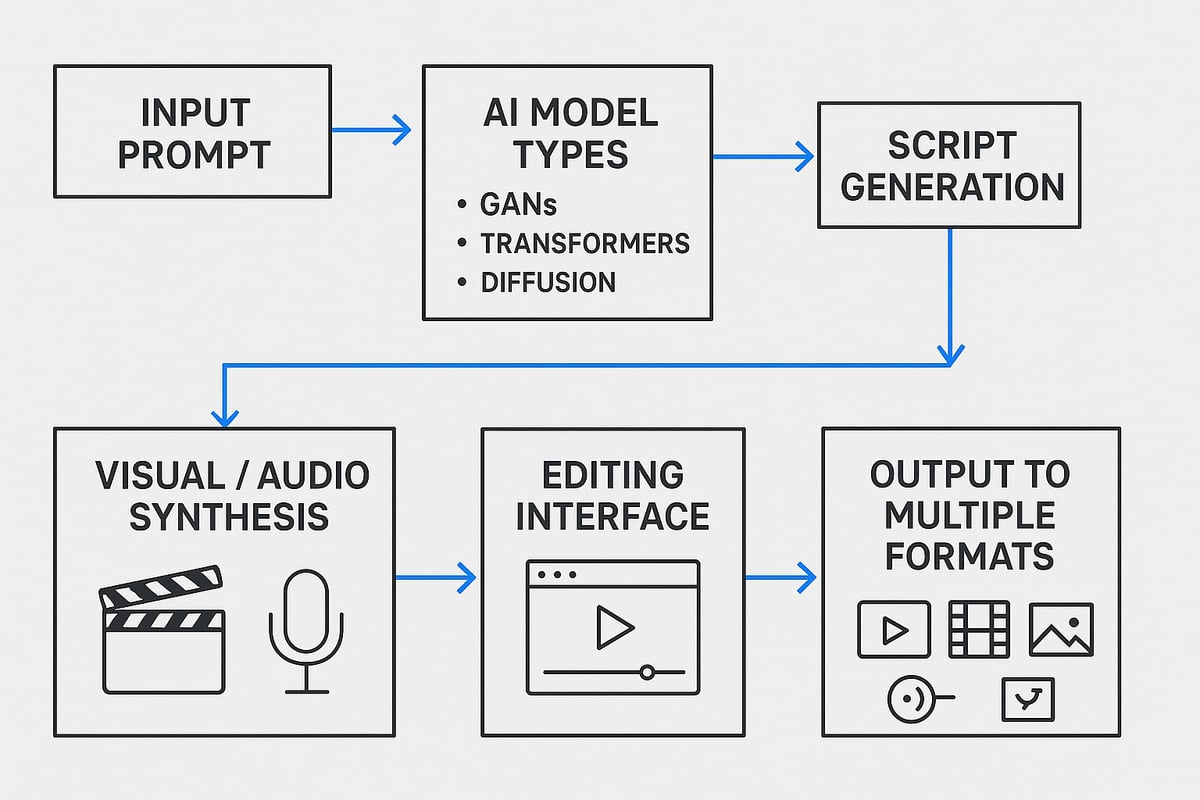
The backbone of ai generated video is a combination of sophisticated machine learning models. Generative adversarial networks (GANs) are used to create realistic visuals by training two networks to compete, resulting in sharper and more lifelike frames. Transformers, which excel at understanding context and sequence, help maintain narrative coherence across video scenes.
Diffusion models have emerged as a breakthrough, gradually transforming random noise into high-fidelity video outputs. Large language models (LLMs) now assist in scriptwriting and directing, translating text prompts into detailed scene instructions.
For example, OpenAI's Sora can generate complex scenes from a single text prompt, blending multiple AI technologies for seamless results.
Model Type | Primary Role | Strengths |
|---|---|---|
GANs | Visual generation | Realism, sharpness |
Transformers | Narrative and context | Coherence, sequencing |
Diffusion | Image/video refinement | Detail, high resolution |
LLMs | Scripting and direction | Language understanding |
The Workflow: From Prompt to Production
Creating ai generated video typically follows a streamlined workflow that integrates both AI and human input.
Ideation and Scripting: Define the video’s purpose and use AI to brainstorm or draft scripts.
Prompt Input: Enter text, images, or references into the AI platform.
Generation: The AI model produces video and audio assets based on the input.
Editing: Use built-in tools to refine pacing, visuals, and sound.
Feedback Loop: Iterate quickly, making changes based on feedback or new ideas.
Many platforms now allow real-time iteration, so creators can adjust scripts or visuals on the fly. Integration with traditional editing suites means that ai generated video can be combined with live footage or polished with manual tweaks.
Example code for a simple text prompt:
Key Features and Capabilities in 2025
In 2025, ai generated video platforms offer a suite of advanced features that rival traditional production. High-resolution output, often in 4K or higher, is standard. Realistic motion and accurate lip-syncing bring avatars and digital actors to life.
Customizable avatars, AI-driven voiceovers, and dynamic background generation allow for unique, branded content. Multi-language support and real-time translation open doors for global audiences, making content more accessible than ever.
Case studies show up to an 80% reduction in production time for branded videos. For real-world examples of these capabilities, see the AI video portfolio examples.
Feature Highlights:
4K+ video resolution for professional quality
Realistic avatars and motion capture
Automated voiceovers in multiple languages
One-click background and environment creation
Built-in translation and captioning
Limitations and Challenges
Despite rapid progress, ai generated video still faces important limitations. The uncanny valley effect—where digital characters seem almost, but not quite, human—remains a challenge. AI may struggle with complex group interactions or scenes needing deep emotional nuance.
Hardware requirements can be steep, as high-quality video generation is computationally intensive. Context errors sometimes occur, such as mismatched visual details or offbeat pacing.
Human creativity is irreplaceable for now. Editors and directors play a crucial role in reviewing, refining, and adding the finishing touches to ensure the final product resonates with audiences.
While ai generated video democratizes content creation, the human touch is essential for storytelling depth and authenticity.
Step-by-Step Guide: Creating an AI-Generated Video in 2025
Bringing your ideas to life with ai generated video is easier than ever in 2025. This step-by-step guide will walk you through the modern workflow, helping you unlock creative potential and efficiency. Whether you are a marketer, educator, or content creator, these actionable steps will set you up for success.
Step 1: Defining Objectives and Scriptwriting
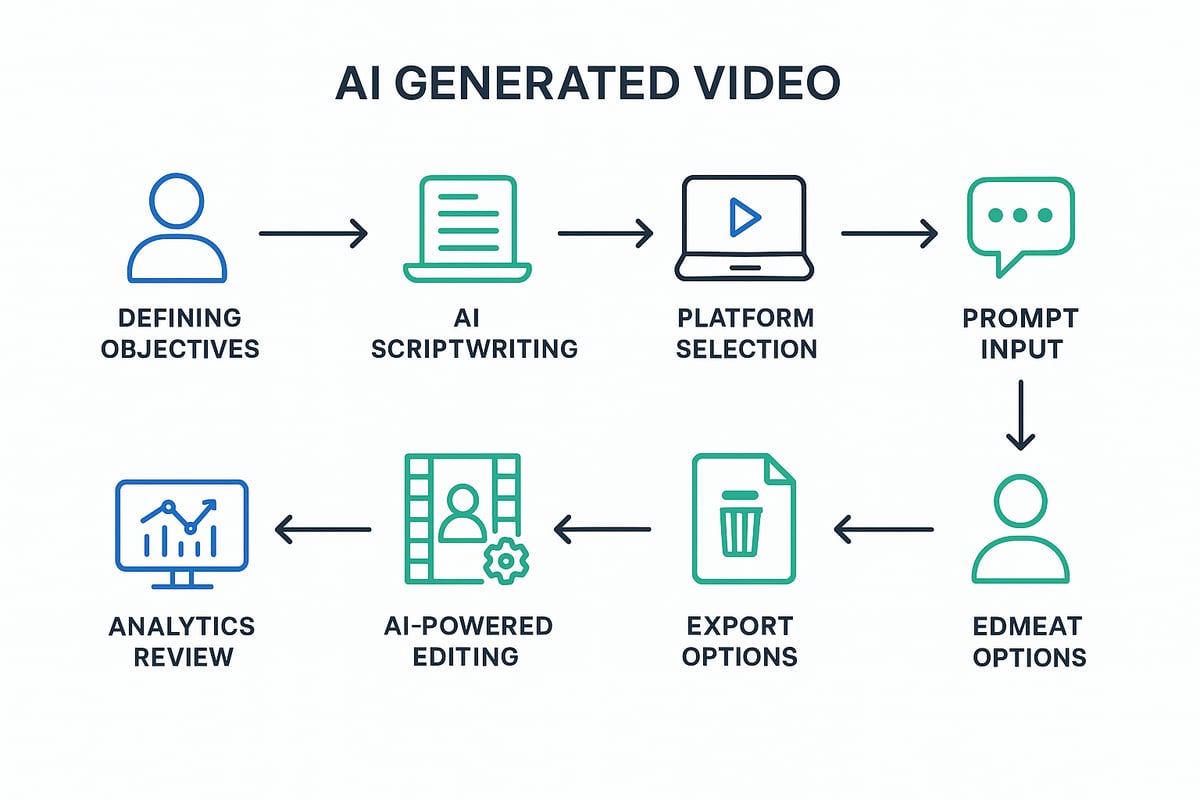
Start by clarifying the purpose of your ai generated video. Are you aiming to drive sales, educate an audience, or entertain viewers? Defining clear objectives ensures your video aligns with your strategic goals.
Next, leverage AI-powered tools for brainstorming and scriptwriting. Many platforms offer built-in assistants that can generate outlines, suggest dialogue, and even refine tone. For example, you can input a simple prompt and let the AI propose a draft:
Review and adjust the AI-generated script to reflect your brand voice and messaging. Collaboration between human creativity and machine efficiency is essential for a compelling final product.
Step 2: Selecting the Right AI Video Platform
Choosing the right platform is crucial for producing high-quality ai generated video content. Consider factors such as output resolution, customization options, integration with existing workflows, and pricing.
Here's a comparison table of leading platforms:
Platform | Output Quality | Custom Avatars | Integration | Cost |
|---|---|---|---|---|
Sora | 4K | Yes | High | $$$ |
Runway | 4K | Yes | Medium | $$ |
Pika Labs | 1080p | Limited | Medium | $ |
Look for platforms that support features like real-time feedback, easy editing, and multilingual capabilities. According to AI Video Generation Market Size and Share 2025, user satisfaction and adoption rates are highest for platforms offering robust customization and seamless workflow integration.
Evaluate trial versions before making a commitment. This step ensures your chosen tool fits your specific needs and budget.
Step 3: Generating Visuals and Audio
Once your script is ready, it is time to bring your ai generated video to life with visuals and sound. Upload your script, prompts, images, or reference materials into the platform. Most tools allow you to customize avatars, select backgrounds, and generate AI voiceovers.
Many platforms provide multilingual support, enabling you to create different language versions in a single workflow. For example, you might select a virtual presenter, adjust their appearance, and choose background music that matches your brand identity.
List of key actions:
Input text or storyboard prompts
Choose or design avatars and backgrounds
Select language and voiceover style
Preview the generated scenes
Iterate as needed to achieve the right look and feel for your audience.
Step 4: Editing and Refining Content
Editing is where your ai generated video truly takes shape. Use AI-powered editing tools to select scenes, adjust pacing, and add effects. These tools often suggest optimal cuts and transitions, yet human review remains vital for quality assurance.
Invite feedback from clients or team members to refine the video. Platforms now support real-time collaboration, allowing multiple users to comment and make changes.
Example workflow:
Review the initial AI output
Adjust timing and scene order
Add branding elements or subtitles
Iterate based on stakeholder feedback
Human oversight ensures your ai generated video maintains authenticity and aligns with your goals.
Step 5: Exporting and Publishing
With your ai generated video polished and approved, export it in the appropriate format for your target channels. Platforms typically support outputs for YouTube, TikTok, broadcast, and more.
Ensure your video complies with platform guidelines and copyright requirements. Many AI tools include automated checks for music licensing and image usage.
According to recent performance metrics, ai generated video often achieves higher engagement rates compared to traditional video, thanks to rapid iteration and personalization.
Step 6: Measuring Success and Iterating
The final step is to analyze your ai generated video’s impact and optimize future content. Use AI-driven analytics to track metrics such as engagement, retention, and conversion rates.
A/B testing with different video variants can reveal which elements resonate best with your audience. Platforms often provide dashboards that visualize performance data and suggest improvements.
Regularly reviewing these insights helps refine your strategy and ensures sustained success with ai generated video. Continuous learning and adaptation are key in this fast-evolving landscape.
Key Applications and Use Cases of AI-Generated Video in 2025
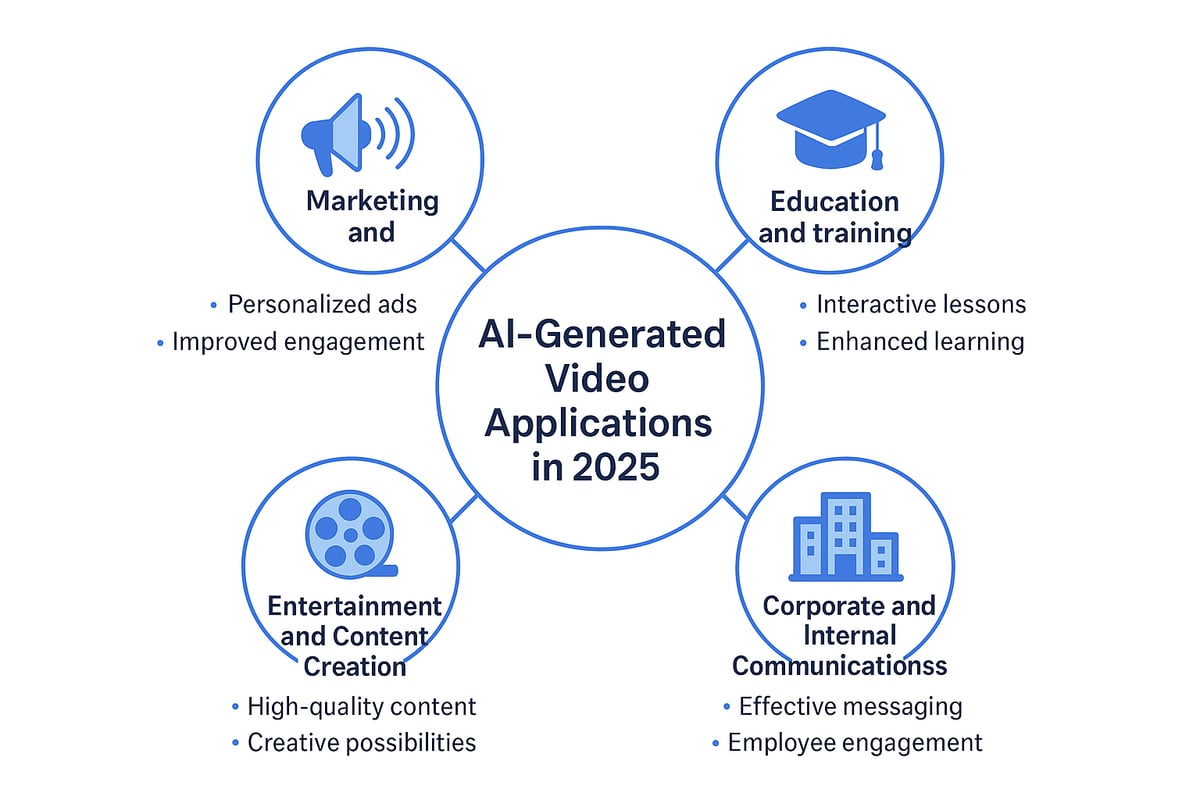
The landscape of ai generated video in 2025 is defined by rapid innovation and widespread adoption across industries. Brands, educators, creators, and corporations are leveraging these tools to transform communication and engagement. The following use cases illustrate where ai generated video is making the greatest impact.
Marketing and Advertising
Ai generated video is revolutionizing marketing by enabling brands to create personalized video ads at scale. Marketers can instantly tailor content for different demographics, regions, or interests, increasing relevance and conversion rates. Dynamic creative optimization powered by AI ensures each viewer receives a unique experience, enhancing engagement.
For example, global campaigns now use ai generated video to localize content in dozens of languages simultaneously. This approach not only speeds up production but also reduces costs significantly. Brands report improved ROI as they shift budgets from traditional video production to AI-driven solutions.
A recent case highlighted a major beverage company launching a global product using ai generated video to deliver region-specific ads. This resulted in a measurable increase in customer engagement and brand recall.
Education and Training
The education sector has embraced ai generated video to deliver automated explainer videos, virtual instructors, and immersive language learning experiences. Teachers and trainers use AI to produce custom lessons, adapting content for different learning styles and languages.
Accessibility is a key advantage. Real-time translation and captioning features allow ai generated video to reach diverse audiences, making learning more inclusive. Statistics show a 50 percent increase in e-learning engagement when AI video is used compared to traditional formats.
Institutions leverage ai generated video for rapid curriculum updates and interactive tutorials, ensuring learners receive current, relevant information. This technology empowers educators to focus on teaching while AI handles repetitive content creation tasks.
Entertainment and Content Creation
Independent creators and entertainment studios are harnessing ai generated video to produce music videos, short films, and viral social media content. AI tools democratize filmmaking, enabling anyone with a creative vision to bring stories to life without the need for large budgets or technical teams.
The creator economy benefits as influencers use ai generated video to launch innovative TikTok challenges and dynamic YouTube shorts. AI-generated characters, settings, and effects open new narrative possibilities, inspiring a wave of experimentation.
For those interested in future trends and market disruption, resources like Future of AI Video Creation 2025 provide valuable insights into how ai generated video is shaping the entertainment landscape.
Corporate and Internal Communications
Corporations rely on ai generated video for efficient internal communications, including training modules, onboarding, and executive announcements. AI enables rapid content creation, allowing companies to update teams quickly and consistently across global offices.
For remote and distributed workforces, ai generated video delivers timely updates and maintains engagement. Data indicates a 70 percent reduction in production costs for internal videos compared to traditional methods.
A multinational corporation recently adopted ai generated video to streamline communications, resulting in faster information flow and improved employee understanding. This shift is helping businesses remain agile and responsive in a fast-changing world.
Ethical, Legal, and Creative Considerations
As ai generated video shapes the future of content, understanding the ethical, legal, and creative landscape becomes essential. Let us examine the key considerations that every brand, creator, and marketer must navigate in 2025.
Deepfake Risks and Content Authenticity
The rise of ai generated video has brought both innovation and concern. Deepfakes have made it easier to create realistic, synthetic media that can blur the line between truth and fiction. This challenges viewers’ ability to trust what they see, especially in news, politics, and brand messaging.
Industry standards are now emerging to address these risks. Watermarking and clear disclosure practices help signal when content is artificially produced. New regulations are evolving to keep pace, requiring compliance and transparency from content creators.
For a deeper look at these ethical questions and best practices, explore AI ethics in video production, where current guidelines and industry recommendations are detailed.
Copyright, Ownership, and Licensing
Navigating the legal landscape of ai generated video is complex. One of the biggest questions is: Who owns content made by AI? Traditionally, copyright has protected works created by humans, but AI blurs these lines.
Recent legal cases have highlighted disputes over the use of copyrighted material in AI training and the ownership of outputs. Brands and creators must carefully review licensing agreements and platform terms to avoid infringement.
For a thorough overview of these legal issues and how to protect your creative assets, visit Legal considerations for AI media. Staying informed is crucial as laws and policies continue to adapt.
Creativity, Human Input, and Artistic Integrity
While ai generated video automates much of the production process, human creativity remains vital. Directors, editors, and storytellers guide the vision, ensuring emotional nuance, narrative flow, and brand authenticity.
AI is best seen as a collaborative tool, amplifying human imagination rather than replacing it. Maintaining this balance is key to producing compelling and original content in 2025.
Societal Impact and Accessibility
Ai generated video is democratizing production, making high-quality content accessible to creators worldwide. This is especially valuable for underrepresented voices and smaller organizations lacking resources for traditional video.
However, there are risks. AI systems can carry biases or perpetuate stereotypes if not designed inclusively. Ongoing efforts are needed to ensure fairness, representation, and ethical standards in every stage of production.
The Future of AI-Generated Video: Trends and Predictions for 2025 and Beyond
The landscape for ai generated video is evolving at a remarkable pace. As we look toward 2025 and beyond, new technologies and business models are set to redefine how organizations, creators, and audiences interact with video content. Understanding these trends is crucial for anyone aiming to stay ahead in this rapidly changing environment.
Next-Generation Capabilities and Innovations
By 2025, ai generated video will move far beyond simple automation. Real-time interactive video will enable experiences where viewers shape the story as it unfolds, similar to choose-your-own-adventure narratives. Generative live streaming will blur the lines between traditional broadcasting and dynamic, AI-driven content, personalizing both visuals and audio on the fly.
Hyper-personalization will allow brands to tailor entire video journeys to individual viewer preferences, creating deeper engagement and retention. Adaptive storytelling will respond to user input, data, or context, providing a unique experience with each viewing. Organizations at the forefront, such as those highlighted on About StudioPOC and AI innovation, are already exploring how advanced AI models can push narrative boundaries and reshape creative possibilities.
Industry Disruption and New Business Models
The rise of ai generated video is triggering major shifts across the media and production landscape. Traditional agencies and studios are adapting to new workflows, while AI-first creative studios emerge to deliver rapid, scalable content. Influencer and creator markets are also evolving as individuals access tools once reserved for large production houses.
New business models are taking shape. Subscription and on-demand platforms are offering customized video at scale, while brands are experimenting with AI-powered campaigns and interactive experiences. Market forecasts project the ai generated video sector to reach $20B by 2026, reflecting significant growth and investment. For an in-depth look at these opportunities, see AI-Driven Video Generation Investment Opportunities.
Area | Shift/Trend | Impact |
|---|---|---|
Agencies & Studios | AI-first workflows | Faster, cost-effective output |
Influencer Economy | Democratized creation tools | New career paths |
Market Growth | Rising global investment | $20B by 2026 |
Challenges and Opportunities Ahead
Despite rapid progress, ai generated video faces important challenges. Regulatory frameworks are still evolving, and organizations must stay vigilant about compliance and transparency. Audiences expect authenticity and ethical use of AI, pushing brands to adopt responsible practices.
However, these challenges are also opportunities. Brands that lead in ethical AI adoption will build greater trust and loyalty. Embracing new technologies while maintaining a human touch can set organizations apart in a crowded digital landscape.
Preparing for the AI Video Revolution
To thrive in the era of ai generated video, organizations and creators need to invest in both skills and resources. Key areas include:
AI literacy and prompt engineering
Video production basics
Data analysis and audience insights
Ethical and legal best practices
Staying ahead means embracing ongoing learning, monitoring industry trends, and building agile teams ready to experiment with new tools. Those who adapt quickly will shape the future of storytelling, marketing, and communication as ai generated video becomes the new standard.